Strengthening the Global Safety Commons: ROOST and Mila Partner to Advance Open Source AI Guardrails, starting with Youth Safety
Published
Young people are turning to AI chatbots for friendship, emotional support, and companionship. Almost none of the tools designed to keep them safe were built with that in mind. Last week, at the 2026 G7 Digital Ministerial in Paris, Robust Open Online Safety Tools (ROOST) and Mila – Québec Artificial Intelligence Institute signed a partnership to develop and distribute open source safety tools, with a focus on one of the hardest problems in online safety: protecting young people. The two organizations will collaborate on research, evaluation, datasets, and tool development across AI and online safety.
Mila brings deep scientific expertise in AI, deep learning, and large language models, and a demonstrated commitment to safety: in October 2025 it launched its AI Safety Studio, whose first initiative develops safeguards to detect and block harmful AI-generated content for young people, including filters that intercept content encouraging self-harm or suicide.
"AI safety should not be left to a handful of large companies making trade-offs behind closed doors. Partnering with ROOST lets our researchers work on harms with real public stakes, and commits us to putting what we build where any provider can use it.” — Valérie Pisano, President and CEO, Mila
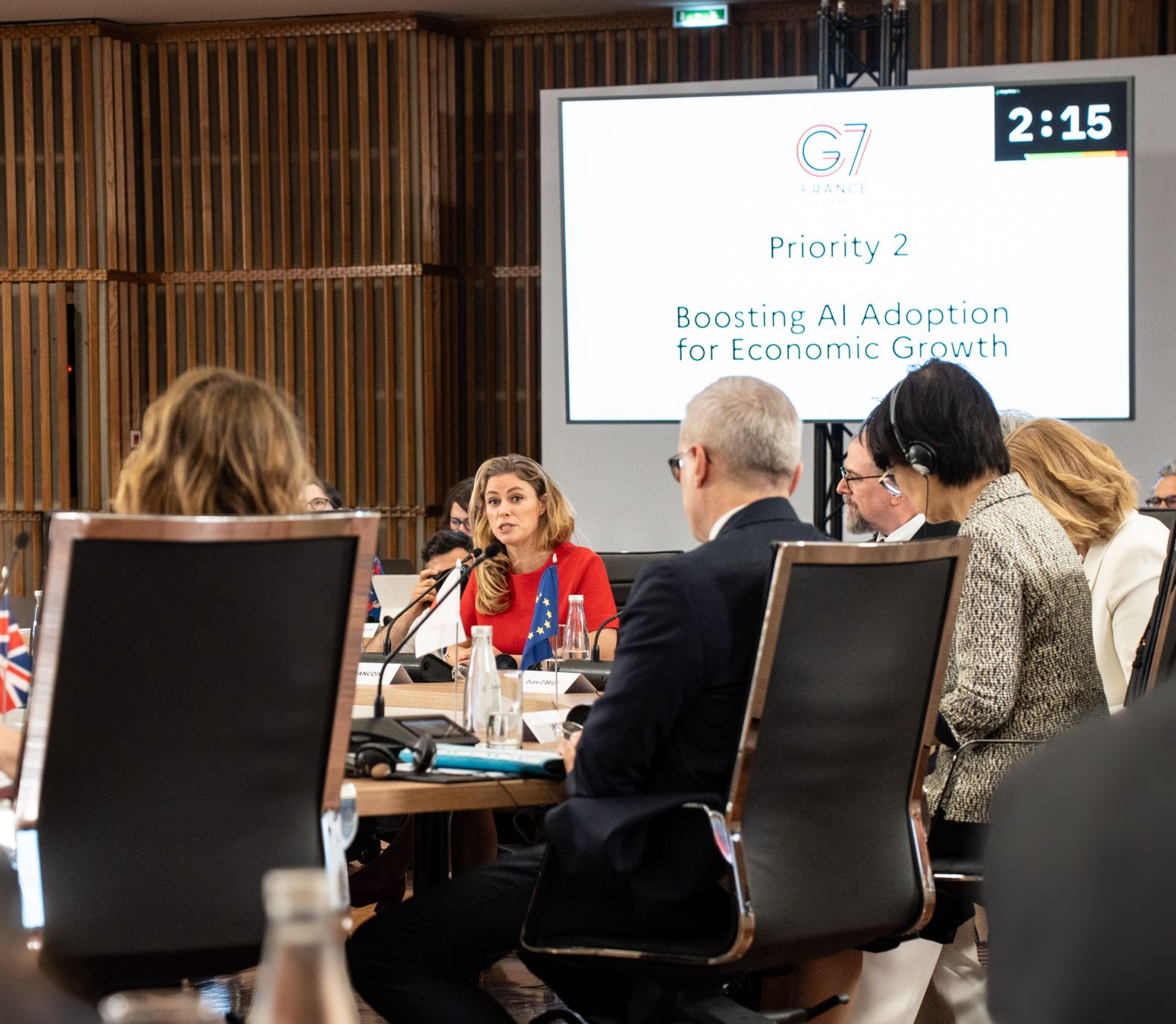
“The safety problems that matter most are often the ones no one has been able to solve in the open. Safety guardrails for youth resilience is a clear example: the need is global, but the tools are scarce. Mila’s scientific depth is expertly shaped to take on these problems, and they have commitments to put the results into the shared commons, where any provider can use them.” — Camille François, President and CEO, ROOST
A Shared Vision for Open, Safe AI Models
The fields of AI and online safety are increasingly complementary. As AI models proliferate, the need for sophisticated, open source safeguards has never been more urgent. ROOST and Mila believe that safety technology should not be a trade secret or a luxury reserved for the largest tech giants. Instead, it must exist in a shared, public commons where it can be audited, adapted, and deployed by platforms and organizations of all sizes.
This urgency is nowhere more relevant than in the youth mental health space. A majority of teens, 72% in the US, now use AI chatbots, and roughly one in three uses them for social and emotional interaction: roleplayed friendships, companionship, romantic exchanges. And yet, there is little to no open, purpose-built tooling to help developers detect harms specific to these platforms, and protect young users; general-purpose content filters are not designed for the psychological and conversational signals that matter here.
As a result, Mila and ROOST will begin their partnership focusing on youth mental resilience: protecting the well-being of young people as conversational AI becomes a fixture of their daily lives. Through its AI Safety Studio, Mila is already developing intelligent filters for youth-safety designed to detect potentially harmful interactions with conversational agents — including content that encourages self-harm or suicide — and to redirect young users toward appropriate support. In March 2026, Mila brought together hundreds of participants from across Canada in a hackathon dedicated to this problem – doing the hard work of building these solutions with input and ideation from the broader community.
ROOST shares in this community driven approach, open sourcing key AI safeguards and convening builders through hackathons and working sprints to stress-test, refine, and improve them. Uniting these complementary perspectives will accelerate the development of crucial safeguards: tools proven through Mila's research can be refined, evaluated, and distributed through ROOST's open commons, where any provider can adopt them. ROOST community of builders — security specialists, open-source security researchers, online child safety experts, and platforms — eager to adopt and contribute to making online spaces safer. Together, we can ensure that tools protecting young people online are built in the open, where it can be trusted, tested, and used by all.
The announcement also comes as G7 leaders gather to coordinate international efforts on AI safety and the protection of minors online. From youth mental resilience, the partnership intends to expand into other key themes addressed by world leaders this month, including harms that today have little or no open-source tooling available, such as combatting violent extremism, and child sexual exploitation. These are problems where a guarded, proprietary approach has left smaller providers without workable options, and where shared, open tooling can raise the floor for everyone.
“Canada’s leadership in AI has always been rooted in world-class research, openness, and a commitment to the public interest. Mila is one of the institutions that helped establish Canada as a global AI leader, and ROOST is doing important work to make AI safety tools more accessible, transparent, and effective. By building safety tools in the open, this partnership will help organizations of every size adopt AI more responsibly. It strengthens trust, supports Canadian leadership in safe AI, and helps ensure the safeguards people rely on are transparent, verifiable, and shared.” — The Honourable Evan Solomon, Minister of Artificial Intelligence and Digital Innovation and Minister responsible for the Federal Economic Development Agency for Southern Ontario, Government of Canada
“As leaders of the G7 are mobilizing to better protect citizens online, I am delighted to welcome this agreement between ROOST and Mila. Safety tools cannot remain exclusive to the largest companies; they must be open, auditable, and collectively improved—serving as a common good for the benefit of society. This is how we will build trustworthy AI that truly protects our children, our teenagers, and all our fellow citizens.” — Anne Le Hénanff, Minister Delegate with responsibility for Artificial Intelligence and Digital Affairs, Government of the French Republic
Building safety for the public interest
Building the open safety commons takes a community: researchers who can pressure-test the science, developers who can harden tools for production, platforms that can deploy them at scale, and safety practitioners who know where the real gaps are.
If you are a safety practitioner or developer in this space – come see our projects on GitHub, like Coop and Osprey. And if you’re a software company, public interest organization, builder or research institute looking to build safeguards that belong with the open source community, please reach out to us at roost.tools.
Join the ROOST Model Community: come to office hours, share policy prompts, or ask implementation questions
Join our Discord Server
Sign up for our newsletter at roost.tools.
Together, we can ensure that the future of our technological society is not only more advanced but fundamentally safer for everyone.